

.avif)
.avif)
Helping VC-backed startups land critical product, engineering, data, GTM & AI hires through warm introductions

.avif)
“Eric consistently delivered candidates we never would have found on our own. He became an extension of our team.”

15+
750+
25K+

.avif)


.avif)
.avif)
.avif)
.avif)
.avif)


.avif)

.avif)
.avif)
.avif)
.avif)
Your roadmap depends on one key hire, and finding them takes more than a cold DM
Cold outreach recruiting
.avif)
Warm intro recruiting

Access a trust network, not just a recruiter database of cold candidates
The wrong hire doesn't just cost money, it costs momentum
Open roles slow growth, hiring mistakes stall execution, and leadership gaps rattle investors. Here's how I help startups make the right hire faster.
.avif)
Activate existing network
.avif)
Expand through warm introductions
.avif)
Screen for long-term fit
.avif)
Your interview-ready 5, in 5 days
.avif)
They stick around, or I find you the right fit
.avif)
What employers and candidates say about partnering with me...


.avif)
.avif)
.avif)
.avif)

.avif)
.avif)
.avif)
.avif)

.avif)


.avif)

.avif)


.avif)
.avif)





















Case studies
Four senior engineers in 65 days, then Mavely tripled revenue
.avif)
Three senior PMs in 43 days, all from rival platforms
.avif)
Seven senior engineers in 30 days each, now Later's only outside recruiter

Hey there, I’m Eric!
Boutique agencies, then leading teams at Randstad. In 2024 I launched Wedoe Search Group with one rule: every search runs through me, no junior on a bench, no partner who wins the retainer and disappears. I cap myself at 4 active searches. After 15 years and 750+ placements, I've earned the right to turn clients away, and I do.
For every hire, 100+ profiles sourced and dozens of conversations narrowed to a shortlist of people I already know. Most arrive through warm intros, because great talent knows great talent, and they trust me enough to refer me. That trust comes from years of telling them when a role isn't right for them, not just when the fee is good.
I'm a founder too. So I get what's on the line every time you hire: your roadmap, your runway, the time you'd rather spend on the product. That's why every search is personal. AI can speed up most of this. Trust still has to be earned.
Whatever you're scaling toward, I'd love
to help you build the team for it.

Roles I've recruited for, plus recent searches:
Four ways to partner with me and build your dream team
Retained Search
.avif)
Contingent Search
.avif)
Fractional Recruiting
.avif)
Embedded Recruiting
.avif)
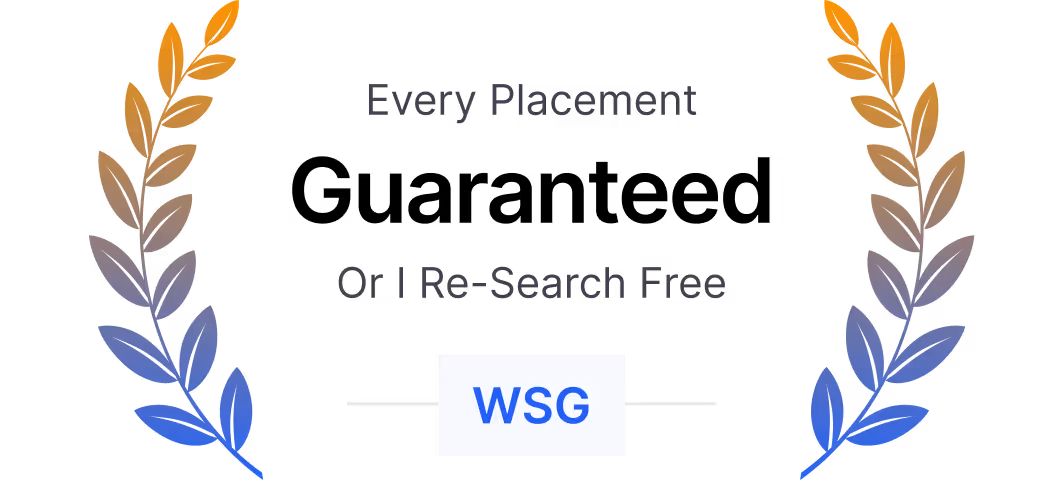

If your hire doesn’t stick around, I’ll source the replacement for free
I stand behind every placement. Here's the deal: 12 months on VP and above roles, twice what most firms offer, and 90 days on every other placement. So there's no risk on your end. Either the hire sticks and helps you build, or I find you the right fit, on me. That's pretty fair, right?
.avif)
.png)
In [Current Year], who you hire is everything

Am I the right recruiter for your search?
Frequently asked questions
At most firms, you meet the partner, agree on the brief, and then the search moves to a junior who doesn't know your company or your space. I run every search personally, capped at four at a time so I can. The same person who takes your brief is the one calling candidates, screening them for Reason for Looking and Candidate Company Fit, and putting your shortlist together.
The candidates I send you mostly aren't on the market. They came through 15 years of direct relationships, or through a warm intro from someone I placed before. Great talent knows other great talent. That referral network is what gets you to five vetted names in five days, not five weeks.
And because of the two-way screening, candidates accept offers over 80% of the time. Plus, if anything doesn't work out, the replacement guarantee means I find you a new hire at no charge. You're not starting from scratch.
Mavely needed four senior engineers during a critical growth phase. 65 days from brief to hired. 75% came through direct outreach to hard-to-reach candidates, 25% through warm intros from people I'd already placed.
ProfitSolv needed three Senior Product Managers post-acquisition, fast. 43 days. Seven interviews. Every single candidate came from a competing legal-tech SaaS company, and none of them had applied anywhere.
Both searches came down to the same thing: warm intros and direct outreach to hard-to-reach candidates already in my network. Not applicants. And if your role is in SaaS, AI, or data, there's a good chance the relevant candidate map already exists before the search starts. I've been building it for 15 years.
The speed comes from how the search actually runs. Most of what I do on a new brief is follow-up calls, not cold outreach. I already know who I'm reaching before you sign, because I've been in conversation with the same senior SaaS, AI, and data people for 15 years.
That's also why candidates accept offers over 80% of the time. The shortlist is small and genuinely qualified, so you're making a decision, not sifting. And if the first slate shows the brief needs tightening, I use that feedback immediately and keep the search moving.
The outreach, the candidate conversations, the reference checks, the offer stage. My calendar. My phone. My name on the work. There's no context lost at any stage, because I'm the person doing each step.
That matters because every wasted interview costs you a week. When the brief never leaves the person running the search, the shortlist is sharper. And when your requirements shift, I know immediately, not when it filters back through a junior.
Retained is for VP-level and above, where the cost of a bad hire or an open seat is significant. You invest across three milestones: kickoff, shortlist, placement, with your sign-off at each stage. If the shortlist isn't right, you don't owe milestone two. And there's a 12-month replacement guarantee built in, so if the hire doesn't stick, I find the replacement at no charge.
Contingent is for senior IC roles where you'd rather only pay when someone starts. A percentage of first-year salary on placement, 90-day replacement included.
Fractional and embedded models are there for teams running multiple searches at once or without an internal recruiter. We'll cover those on the call if relevant.
Each payment stage is tied to something you can actually see and evaluate, not billable hours or vague activity.
But the more useful answer is why it rarely comes up. Every search starts with two screens: Reason for Looking and Candidate Company Fit. Not just comp. Whether the role, the stage, and where your company is headed genuinely align with where that person wants to go. That's what separates a hire that lasts from one that doesn't.
Placements I made five years ago are still on those teams. And it's why candidates refer other candidates to me. They know I won't put them somewhere that isn't right for them. When the fit is genuine on both sides, people stay.
If something does go wrong, the terms are straightforward: same role, no additional search fee, I start the replacement the day they give notice.
Comp matters, but it rarely solves the access problem on its own. Senior candidates usually move when the role, the stage, the leadership, and the timing are all right, not because someone posted a higher number. Getting to that conversation requires a different approach.
The people I reach come through 15 years of direct conversations and warm intros from senior leaders I've already placed. Great talent knows other great talent. That's how you get to the hard-to-reach candidate who wasn't applying, wasn't thinking about leaving, but is absolutely the right person.
And every week the seat stays open, your team carries the gap. The search that keeps reposting costs more than the one that finds the right person in five days.
Yes. And honestly, it's often the best place to start.
The strongest candidate for your role is probably already doing similar work at a company in your space. They know the market, your customers, and the exact problems you're solving. They've proven they can do the job in a comparable environment, and that reduces the guesswork considerably. The ramp time is shorter too.
The way I approach it matters, though. Competitor recruiting done badly can damage your reputation before the candidate ever meets you. I reach out with a specific role, only when I genuinely believe it's the right next step for that person, not just a seat that needs filling. That's what makes the conversation worth having.
In the ProfitSolv search, all three Senior Product Managers came from competing legal-tech SaaS companies. None had applied anywhere. That wasn't luck. That was the brief, done the right way.

Still wondering if we’re the right recruiter for you?
.avif)
.avif)
.avif)
.avif)